

Preface
In an era where ideas fuel economies and innovation drives progress, Intellectual Property (IP) law stands as the cornerstone of creative and technological advancement. From groundbreaking pharmaceuticals to viral digital content, IP rights protect human ingenuity, ensuring that creators reap the rewards of their labour while fostering a competitive marketplace. As we navigate the complexities of globalization and rapid digital transformation, the framework of IP law faces unprecedented challenges that demand urgent reform and robust enforcement. At its core, IP law encompasses patents, copyrights, trademarks, and trade secrets—mechanisms designed to balance individual incentives with public benefit. Patents, for instance, grant inventors exclusive rights for a limited period, spurring research and development in fields like biotechnology and artificial intelligence. Copyrights safeguard artistic expressions, from literature to software code, enabling creators to monetize their work. Trademarks build brand trust, while trade secrets preserve competitive edges in industries reliant on proprietary knowledge. The digital revolution has exposed vulnerabilities, and emerging technologies like generative AI complicate matters further. Enforcement gaps exacerbate these issues, especially in developing economies where weak judicial systems and lax border controls allow counterfeit goods to flood markets. Despite progressive legislation, in many countries the challenges persist. In an increasingly interconnected world, the relevance of IP law transcends national boundaries. The globalization of trade, the digitization of creative works, and the rise of transnational innovation ecosystems have made the international dimension of IP law more critical than ever before. India’s IP architecture is anchored in robust statutes: the Patents Act, 1970 (amended in 2005 to comply with TRIPS); the Copyright Act, 1957 (updated in 2012); the Trademarks Act, 1999; and the Designs Act, 2000. The establishment of the Intellectual Property Appellate Board (IPAB)—now merged into commercial courts post-2021—and the creation of specialized IP divisions in High Courts reflect institutional progress. The National IPR Policy of 2016 further signalled intent, emphasizing this commitment.
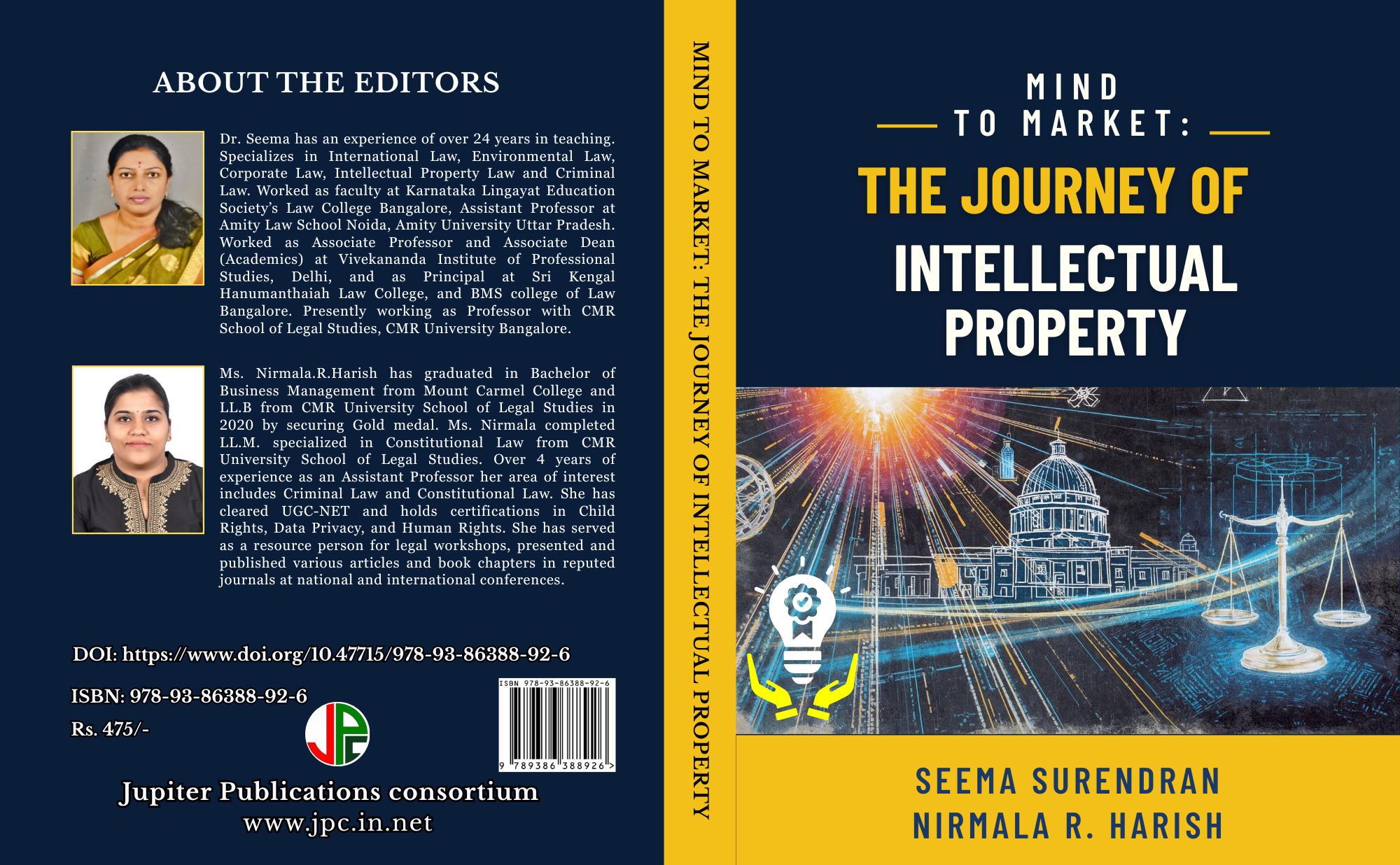
This book is a response to the growing need for clarity, awareness, and strategic understanding of IPR. The book brings together a collection of articles that explore the multifaceted world of Intellectual Property Law—from foundational principles to contemporary challenges. Each contribution reflects a unique perspective, offering critical insights into the legal frameworks governing copyrights, patents, trademarks, geographical indications, and trade secrets. It further delves into the pressing questions addressing intellectual property law, exploring contemporary trends. The book covers various facets of IP, particularly in the light of ongoing challenges and its implementation.


Reviews
There are no reviews yet.